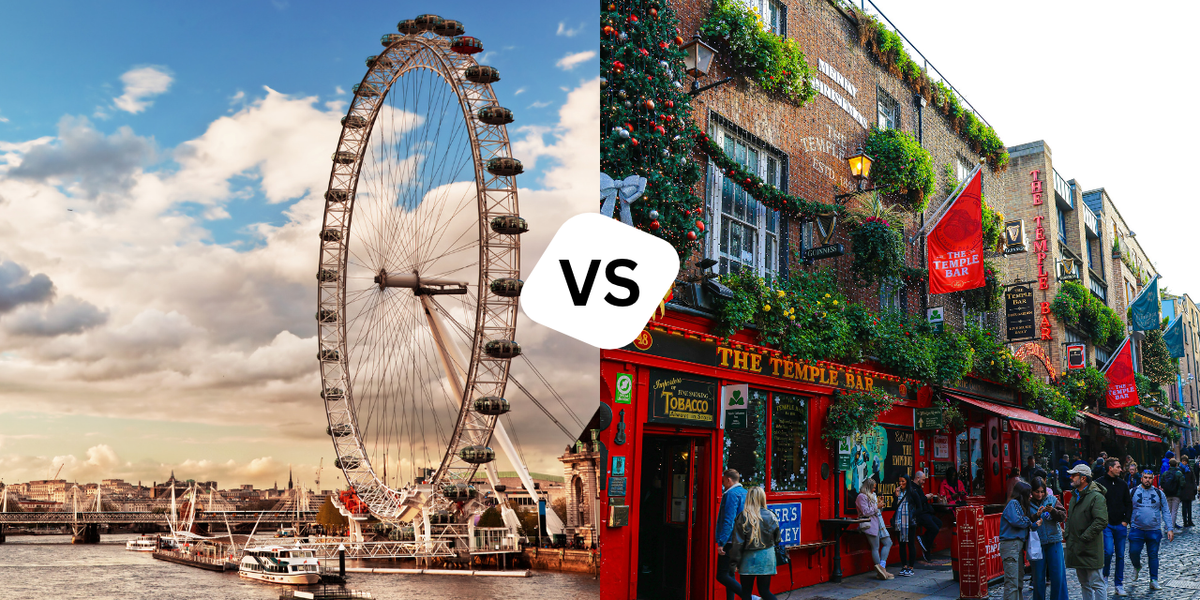
The UK and Ireland look a lot alike on the surface. Both are English-speaking. Both offer mostly one-year master's degrees. Both are popular with students from Kerala. So how do you choose?
The differences are smaller than between, say, the UK and Germany, but they're real. They affect your budget, your choice of universities and even how smooth your application feels. This guide covers the basics in plain language, focusing on studying. It's written in November 2026, and fees and rules change, so always check official sources. If you'd like advice for your own situation, Cliftons Study Abroad is happy to help.
The Short Answer
Neither is simply "better." The UK is bigger, with a far wider choice of universities and subjects, and a very strong global name. Ireland is smaller and often a bit cheaper, with a friendly, compact university system and access to the European market. Which one suits you depends on your course, your budget and what you want from the experience.
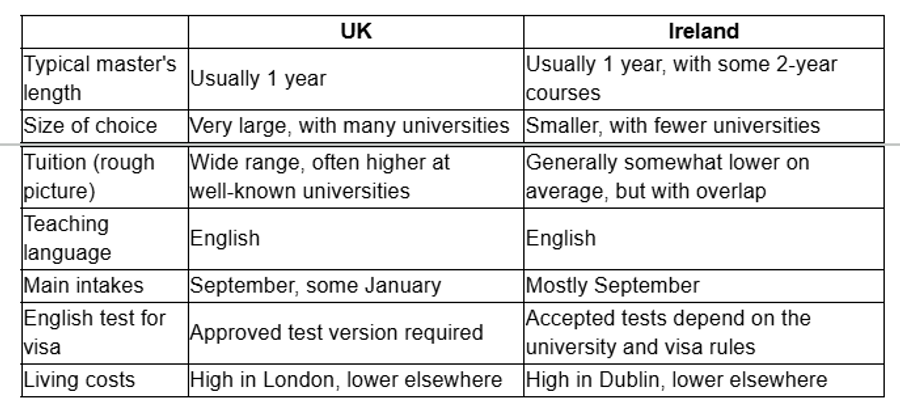
The Basics Side by Side
Treat this as a starting point, because details vary by university and course.
Course Length
Both countries are known for one-year taught master's degrees, which means less time away from home and fewer months of living costs than two-year programmes elsewhere. Most Irish taught master's programmes also run for one year, though some courses, especially research-focused ones, take longer. In the UK, a few courses also run longer, particularly those with placements or integrated years.
The result is that course length isn't usually the deciding factor between these two. Check each programme individually.
Choice of Universities and Subjects
This is one of the biggest differences.
UK: There are well over a hundred universities, including several in the global top rankings, and almost every subject imaginable is available. If you want a very specific specialisation, the UK is more likely to have it. See our guide to the best universities in the UK for Indian students.
Ireland: The system is much smaller. There are fewer universities, but Ireland has strong programmes in areas such as technology, data, business, pharmaceutical and life sciences, and healthcare. Smaller class sizes and a more personal feel are often mentioned by students. See our guide to a master's in Ireland for Indian students.
If your subject is very niche, check that it exists in Ireland before you commit. If it's mainstream, both countries probably have strong options.
Cost: Often Closer Than People Think
Cost is usually the first question. Published figures vary a lot between sources, so treat any number you see online, including those on this page, as a rough guide and check each university's own fee page.
Tuition. Irish master's tuition is generally somewhat lower on average than in the UK, though both countries have a wide range. Business, MBA, medicine and some technical courses cost more in both. Famous universities in both countries sit at the top of the range.
Living costs. Both London and Dublin are expensive. Outside the capitals, costs are noticeably lower in both countries. In the UK, cities such as Manchester, Glasgow, Leeds or Sheffield are more affordable than London. In Ireland, Cork, Galway and Limerick are cheaper than Dublin.
Visa costs. The UK visa process includes additional costs such as a health surcharge, while Ireland's visa fee is lower. Details change, so check the official sites.
For funding, see our basics guide to education loans for studying abroad.
The practical lesson: compare the total for your own course and city, not just the headline tuition.
Applying: Slightly Different Processes
UK: Most master's applications go directly to the university, with a statement of purpose, references and transcripts. After you accept an offer, the university issues a CAS, and then you apply for the visa. For the visa you'll need an approved English test. See our guide to IELTS vs PTE vs TOEFL.
Ireland: Master's applications also go directly to the university. For the student visa, recent sources say you may need to show part-payment of tuition and proof of funds for living costs before the visa is issued, and large recent deposits may need explaining. Requirements change, so check the Irish immigration website.
In both cases, apply early. Popular courses can fill up and deadlines at some Irish universities come earlier than people expect.
English Test Requirements
Most master's courses in both countries ask for IELTS around 6.5, though some ask for more, and some accept other tests. The UK visa side is stricter about which test version you take. In Ireland, the tests accepted depend on the university and visa rules. Always check both the university's requirement and the visa requirement. Our guide to common student visa rejection reasons explains why English scores matter.
Work During Your Studies
Both countries allow student visa holders to work part-time within limits during term, with more hours during official holidays. Details differ, so check your own visa conditions, and remember that your studies come first.
Life on Campus
Both countries are English-speaking and welcoming to international students.
UK: Large, diverse campuses, many international students, and cities of every size. The variety means you can choose anything from a big city to a quiet university town.
Ireland: A smaller, closer-knit feel, often described as friendly and easy to settle into. Compact cities make it simple to get around
Neither is better. It's a matter of preference.
A Quick Note on After Your Studies
Both countries offer a period to stay on after graduation. The UK's Graduate Route is changing from two years to 18 months for applications from 1 January 2027, while Ireland's Stamp 1G scheme currently allows up to 24 months for master's graduates. Rules change, so check official sources, and remember these are routes to look for work, not guarantees.
Who Suits Which Country?
The UK may suit you if:
- You want the widest possible choice of universities and subjects
- You're targeting a well-known university name
- Your course is very specialised
- You can manage somewhat higher costs
- You like the idea of a large, varied student environment
Ireland may suit you if:
- You want a one-year master's in a smaller, friendly country
- Your subject fits Ireland's strengths, such as technology, data, business or life sciences
- You'd like costs that are often a little lower
- You prefer a compact, personal setting
How to Choose: Five Simple Questions
1. Does your course exist in both? Start with the programme, not the country.
2. What's your budget? Compare total costs for your course and city.
3. How competitive is your profile? Check the entry requirements and your marks.
4. How soon is your intake? Check deadlines and timelines for each.
5. What kind of environment do you want? Big and varied, or smaller and closer-knit.
If you're still stuck, also read our guide to the best countries for Kerala students to pursue a master's.
Mistakes to Avoid
- Choosing only on tuition. Include living costs, visa costs and travel.
- Assuming both countries have your course. Check each one.
- Taking the wrong English test. The UK visa needs an approved version.
- Using outdated information. Fees, funds requirements and visa rules change often.
- Picking a country before a course. Let the course lead.
- Leaving it too late. Applications, English tests and visas take time.
Need More Than the Basics? Talk to Cliftons Study Abroad
This guide only covers the basics. Choosing between the UK and Ireland depends on your course, your marks, your budget and what kind of study experience you want, and a wrong choice can cost time and money. Which country suits your profile, which universities are realistic, and how to plan your English test, documents and timeline are all things a counsellor can help you work out.
At Cliftons Study Abroad in Kochi, we help students across Kerala compare countries, shortlist courses and universities, and manage applications and visas. If you'd like personal guidance, our counsellors are ready to help.
Can't decide between the UK and Ireland? [Contact Cliftons Study Abroad today for a free consultation.]