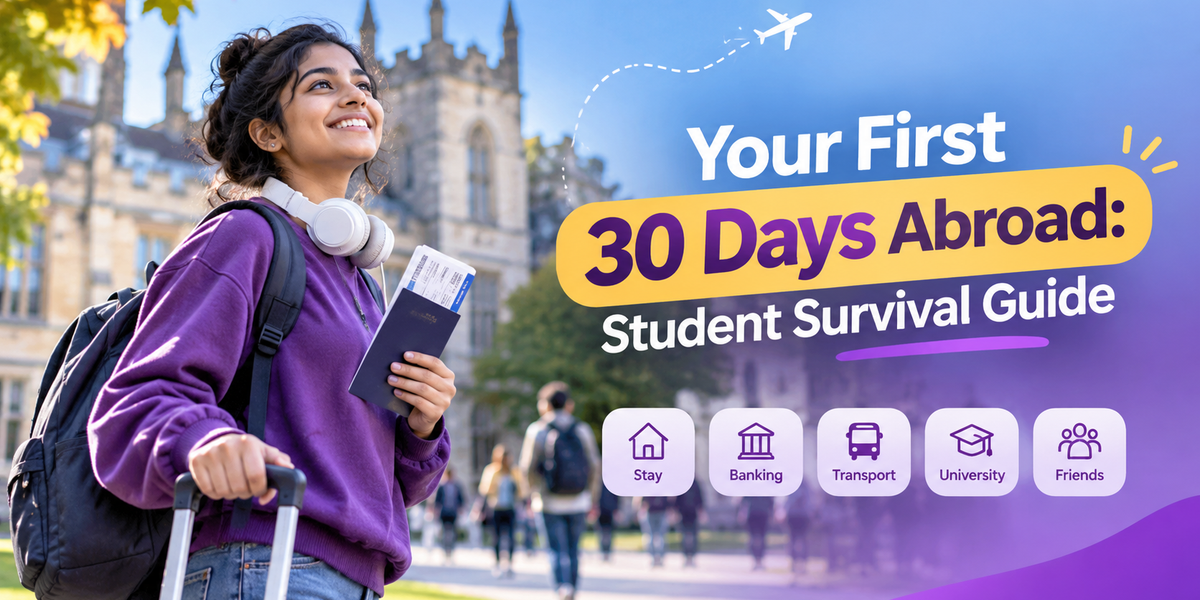
Moving to a new country for higher education is an exciting milestone. From exploring a new city to meeting people from different cultures, studying abroad brings countless opportunities. However, the first few weeks can also feel overwhelming as you adjust to a completely different environment.
Your first 30 days abroad are important for building a comfortable routine, understanding your surroundings, and preparing for your academic journey.
Whether you are travelling to the UK, Germany, France, Australia, Ireland, or another destination, having a basic understanding of what to do after arrival can make your transition much easier.
Here is a simple student survival guide to help you navigate your first month abroad.
1. Complete Your Airport Arrival Formalities
Your journey begins as soon as you land at your destination. After arriving, follow the airport instructions and complete the necessary immigration and entry formalities.
Keep your important documents easily accessible, including:
- Passport and student visa
- University offer letter or confirmation documents
- Accommodation details
- Travel and health insurance documents
- University contact information
Once you complete the formalities, collect your luggage and arrange transportation to your accommodation.
Tip: Always keep digital and physical copies of your important documents.
2. Settle Into Your Accommodation
Finding a comfortable place to stay is one of the first priorities after arriving abroad.
Whether you have booked university accommodation, private student housing, or shared accommodation, take some time to understand your living arrangements.
During your first few days:
- Check your room and available facilities.
- Understand the accommodation rules.
- Locate nearby grocery stores and essential shops.
- Check laundry and kitchen facilities.
- Save your accommodation address and emergency contact details.
If you are staying in shared accommodation, communicate with your roommates and understand the shared responsibilities.
A comfortable living environment can help you settle into your new life more easily.
3. Get a Local SIM Card and Internet Connection
Staying connected is essential when you move to another country. A local SIM card helps you communicate with your university, accommodation provider, friends, and family.
After arrival, explore available mobile network providers and choose a suitable plan based on your needs.
Make sure you have:
- A working local mobile number.
- Mobile data or internet access.
- Important emergency contact numbers.
- Access to university communication platforms.
Having reliable internet access will also help you navigate unfamiliar places and stay connected with your family back home.
4. Understand Local Transportation
Public transportation is often the easiest and most affordable way for international students to travel.
During your first week, familiarise yourself with the local transport system.
Depending on your destination, you may use buses, trains, trams, or metro services.
Here are a few basic things to do:
- Identify the nearest bus and train stations.
- Download local transport applications.
- Understand ticketing and payment systems.
- Check student travel discounts.
- Learn the route from your accommodation to your university.
Planning your daily commute in advance can help you avoid unnecessary delays.
5. Open a Bank Account
Managing your money becomes easier when you have access to a local bank account.
Many international students choose to open a local account to receive funds, pay accommodation expenses, and manage everyday transactions.
The requirements may differ depending on the country and bank.
Generally, you may need:
- Passport
- Student visa or residence documentation
- University enrolment confirmation
- Proof of address
Research the banking options available in your destination before applying.
For additional guidance on managing finances and education-related expenses abroad, you can contact Cliftons Study Abroad.
6. Complete Your University Registration
Once you settle into your accommodation, make sure you complete the university's registration and enrolment requirements.
Your university may ask you to attend an orientation session, verify documents, or complete online registration.
During this period:
- Check your university email regularly.
- Complete pending registration requirements.
- Collect your student ID card.
- Understand your timetable.
- Explore the campus facilities.
- Attend orientation programmes.
These activities help you become familiar with your university environment and prepare for your academic experience.
7. Understand Local Laws and Student Responsibilities
Every country has its own rules and regulations. As an international student, it is important to understand the basic responsibilities associated with your visa and student status.
Pay attention to:
- Student visa conditions.
- Work-hour restrictions, where applicable.
- Attendance and academic requirements.
- Residence permit or registration requirements.
- Local laws and public safety guidelines.
Do not rely on information from unofficial sources. Always check the latest instructions from your university and relevant government authorities.
8. Manage Your Budget and Daily Expenses
Your first month abroad may involve several additional expenses, including groceries, transportation, accommodation deposits, and essential purchases.
Creating a simple monthly budget can help you manage your finances effectively.
Consider keeping track of:
Accommodation expenses.
- Food and grocery costs.
- Transportation.
- Mobile and internet bills.
- Study materials.
- Personal expenses.
Avoid unnecessary spending during your initial weeks. Compare prices, explore student discounts, and prioritise essential purchases.
Good financial habits will help you manage your student life more confidently.
9. Explore Your New City
Studying abroad is not just about attending classes. It is also an opportunity to experience a new culture and explore a different country.
Once you are comfortable with your surroundings, take some time to explore your city.
Start with nearby places such as:
- Grocery stores and shopping centres.
- Hospitals and pharmacies.
- Public libraries.
- Parks and recreational areas.
- Your university campus.
- Local student communities.
You can also explore cultural events and student activities organised by your university.
Remember to stay aware of your surroundings and follow basic safety precautions.
10. Build Connections and Make New Friends
Moving to a new country can sometimes feel lonely, especially during the first few weeks.
Making new friends and building connections can make your transition much easier.
Try joining university clubs, student societies, cultural groups, and international student communities.
You can also connect with classmates and students from your own country.
Do not hesitate to communicate with people from different backgrounds. Studying abroad is a great opportunity to improve your communication skills and understand different cultures.
11. Take Care of Your Health and Well-being
Adjusting to a new country, climate, food, and academic environment can take time.
Make sure you prioritise your physical and mental well-being during your first month.
A few simple habits can make a difference:
- Maintain a regular sleeping schedule.
- Eat balanced and nutritious meals.
- Stay physically active.
- Understand how to access local healthcare.
- Keep emergency healthcare information available.
If you feel overwhelmed, speak with your university's student support team or someone you trust.
Your health and well-being are just as important as your academic progress.
Your First 30 Days Abroad: A Simple Checklist
Use this basic checklist to keep track of your initial activities.
- Complete airport and immigration formalities.
- Reach your accommodation safely.
- Get a local SIM card.
- Understand public transportation.
- Explore nearby grocery stores and essential services.
- Complete university registration.
- Collect your student ID card.
- Understand local banking options.
- Learn about visa conditions and responsibilities.
- Create a monthly budget.
- Explore your university campus.
- Connect with other students.
- Understand local healthcare facilities.
Completing these basic activities can help you feel more confident and organised during your first month abroad.
Final Thoughts
Your first 30 days abroad are the beginning of an exciting new chapter. Although adjusting to a different country may take some time, proper planning and a positive mindset can make the experience much smoother.
Focus on completing your essential arrangements, understanding your responsibilities, and gradually adapting to your new surroundings. Remember that you do not have to figure everything out on your own.
At Cliftons Study Abroad, we support students throughout their study abroad journey, from university selection and admission assistance to visa guidance and post-landing support.
Planning to study abroad? Contact Cliftons Study Abroad for personalised guidance and assistance at every step of your international education journey.
Start your study abroad journey with confidence!