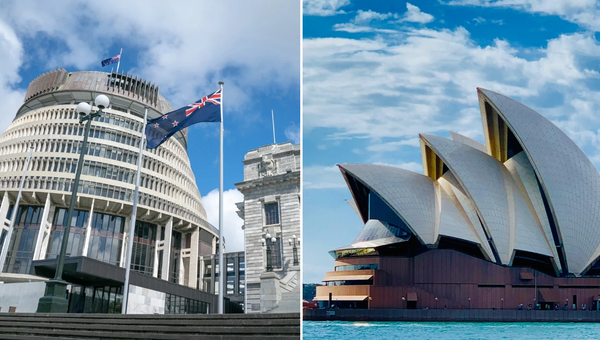
Every year, thousands of students from Kerala decide to do their master's abroad. And every year, many of them get stuck on the same question: which country?
It's a fair thing to wonder about. The UK, Ireland, Germany, Australia, New Zealand and France all offer strong universities, but they work differently. Courses last different lengths of time, costs vary a lot, and the application process isn't the same everywhere. This guide covers the basics in plain language so you can start narrowing things down. It focuses on studying: course length, cost level, teaching language, intakes and what each country suits best. It's written in November 2026. If you'd like advice for your own situation, Cliftons Study Abroad is happy to help.
Start With the Course, Not the Country
Before comparing countries, it helps to know what you want to study. A country that's perfect for engineering might not be the best for nursing or business. Think about your subject first, then see which countries fit. A good course at the right university in a country that suits your budget will always beat a famous country with the wrong course.
Quick Comparison
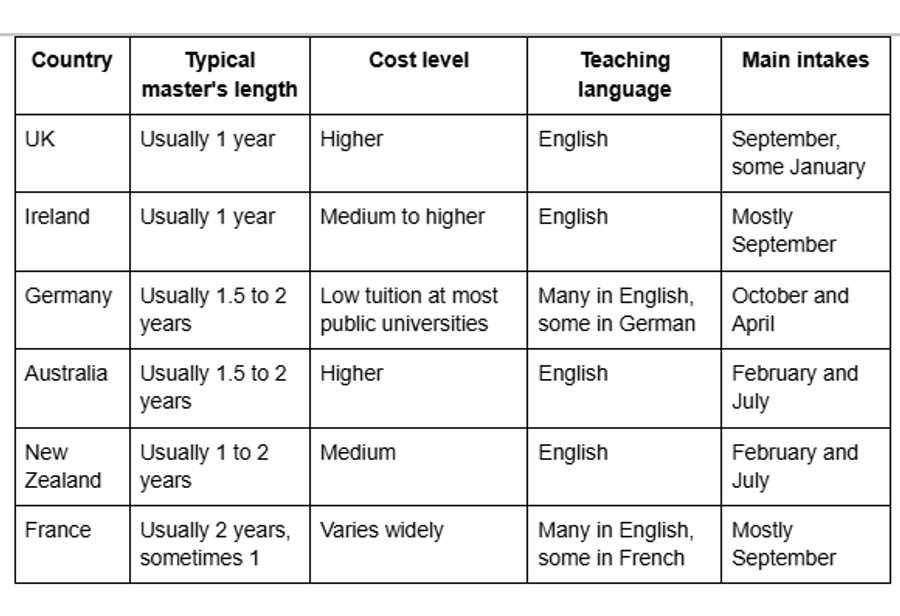
Here's a simple side-by-side look. These are broad pictures, not promises, because details change by university and course.
United Kingdom
The UK is one of the most popular choices for Kerala students, and it's easy to see why. Most taught master's courses last just one year, which means a shorter time away from home and a shorter period of paying living costs. It has a huge range of universities and subjects, and a UK degree is recognised around the world.
Good to know: Fees are on the higher side and vary widely between universities. Living costs are higher in London than in other cities, so many students look at universities elsewhere. See our guide to the best universities in the UK for Indian students.
Suits you if: you want a short, intensive master's and a wide choice of courses.
Ireland
Ireland is smaller than the UK but increasingly popular. Master's courses are mostly one year long, universities are compact and well connected, and the country is English-speaking. Fees fall in a broad range, generally somewhere between the UK and some other destinations, depending on the course.
Good to know: Application deadlines for popular universities can come early, and some courses are competitive. Many students find that Cork, Galway and Limerick are cheaper to live in than Dublin. See our guide to a master's in Ireland for Indian students.
Suits you if: you want a one-year master's in a smaller, friendly country.
Germany
Germany stands out for one big reason: most public universities charge no tuition for master's courses, only a semester contribution that's usually a few hundred euros. There are exceptions, since a few states and universities charge non-EU students, so always check. Germany is especially known for engineering, technology and science.
Good to know: Many master's programmes are taught in English, but not all, and knowing some German makes daily life easier. The application process involves more paperwork, such as document verification and a blocked account for the visa, so you'll need to start early. See our guide to a master's in Germany for Indian students and our post on studying engineering in Germany.
Suits you if: you want to keep tuition low and you're happy to handle a more paperwork-heavy process.
Australia
Australia has a large number of universities and a very wide range of courses, including a strong set of research universities. Master's degrees can last from one and a half to two years depending on the course, and many universities have intakes in both February and July.
Good to know: Costs are higher, both for tuition and for living, and the student visa process is detailed, including a Genuine Student assessment and proof of funds. Rules and fees change often, so check official sources. See our guide to the basic requirements for studying in Australia and the trending courses in Australia.
Suits you if: you want a big choice of courses and you're prepared for a higher budget.
New Zealand
New Zealand has eight universities, all internationally recognised, and a calm, student-friendly environment. Master's courses can be one to two years long. Costs are generally lower than in Australia, and class sizes can feel smaller and more personal.
Good to know: There's less choice of universities and courses than in bigger countries, and the main intakes are February and July. See our guides to studying in New Zealand for Indian students and the best courses in New Zealand.
Suits you if: you want a quieter, practical learning environment and a more manageable budget.
France
France is well known for business schools, design, fashion, luxury and the arts, and it also has strong public universities. Master's degrees usually last two years, though some business programmes run for one. There's a wide gap between public university fees and those at private business schools, which can be much higher.
Good to know: Many programmes are taught in English, but knowing some French helps with daily life, and some courses are in French. Business schools often have their own admission tests. See our guides to business courses in France and management courses in France.
Suits you if: you're interested in business, design or the arts and want a European experience.
What About Canada and the USA?
Both are popular with Indian students, though they're outside the core destinations in our guides. The USA has a huge range of programmes, often with higher costs and standardised tests such as the GRE for some courses. Canada offers many master's programmes with a strong reputation. If you're interested in either, our counsellors can talk you through the options.
How to Choose the Right Country
A few simple questions can help.
What's your subject? Some countries are especially known for certain fields. Check where your course is strongest.
How much can you spend? Compare tuition, living costs and the length of the course together. A shorter course can save on living costs even if the tuition is higher. If you're thinking about a loan, our basics guide to education loans for studying abroad is a good place to start.
How long do you want to study? A one-year master's and a two-year master's are very different commitments.
Which language do you want to study in? English is easiest, but some countries have courses in other languages, and learning a language can be a bonus.
What's your academic profile? Your marks, your degree and your English score all affect which courses are realistic.
What kind of environment suits you? Big city or quiet town, large campus or small, cold or mild climate. These matter more than people expect.
Basic Entry Requirements
Requirements vary, but most master's courses ask for a relevant bachelor's degree with a minimum grade, proof of English such as IELTS, a statement of purpose, references and academic transcripts. Some courses add entrance tests, interviews or portfolios. Many Indian bachelor's degrees are three years long, which some universities accept and others don't, so check each course's rules.
Common Mistakes to Avoid
- Choosing a country because friends went there. Your needs may be different.
- Looking only at tuition. Include living costs, insurance and travel.
- Ignoring course length. A one-year course and a two-year course cost very different amounts overall.
- Assuming any country accepts your degree. Check each course's requirements.
- Applying too late. Applications, offers and visas all take time.
- Relying on old information. Fees, deadlines and rules change every year.
Need More Than the Basics? Talk to Cliftons Study Abroad
This guide only covers the basics. The best country for your master's depends on your course, your marks, your budget and your plans, and a wrong choice can cost time and money. Which countries suit your profile, which universities are realistic, and how to plan your English test, documents and timeline are all things a counsellor can help with.
At Cliftons Study Abroad in Kochi, we help students across Kerala compare countries, shortlist courses and universities, and manage applications and visas. If you'd like personal guidance, our counsellors are ready to help.
Not sure which country is right for your master's? [Contact Cliftons Study Abroad today for a free consultation.]