For many students from Kerala, studying abroad isn't just about the degree. It's also about what happens next. Will there be a chance to work? How long can you stay? Will your qualification actually lead somewhere?
Those are sensible questions, and the answers differ a lot from country to country. This guide covers the basics in plain language: which countries are popular for career-minded students, how their post-study work routes compare, and what to think about before you choose. It's written in November 2026, and rules in this area change often. If you'd like advice for your own situation, Cliftons Study Abroad is happy to help.
A Quick Honest Note First
No country can promise you a job. A post-study work visa gives you time and permission to look for one, but finding a role still depends on your course, your skills, your experience, the job market and a fair bit of effort. Be wary of anyone who treats a long visa as a guarantee of a career.
It also helps to remember that your career starts with your course. A well-chosen programme at a good university gives you a much stronger base than a course picked only because the country has a generous visa.
What Makes a Country Good for Career Opportunities?
A few things matter more than the headline "years of work rights."
Post-study work options. Whether you can stay and work after your degree, and for how long.
Job market size and fit. Whether there are employers in your field.
Language. English-speaking countries are easier for most students. Elsewhere, knowing the local language can matter a lot.
Cost of living. A high cost of living can eat into the benefit of earning a good salary.
Settlement options. Whether there are realistic routes to longer-term residence, though these are never guaranteed.
Course recognition. Whether your qualification is respected and, where needed, accepted by professional bodies.
Post-Study Work Routes at a Glance
Here's a simple comparison. These are broad pictures based on current information, and the details change. Always check official government sources.
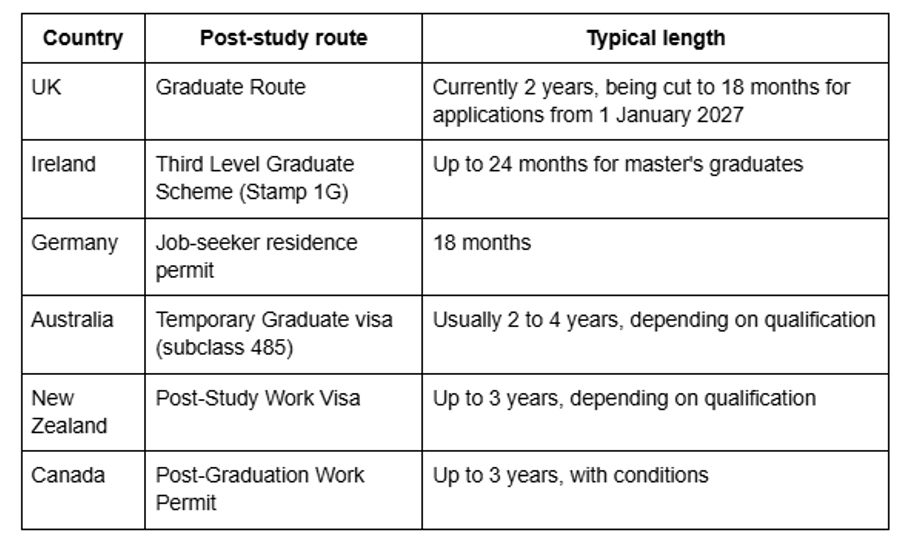
Notice that most of these allow you to look for work without a job offer first. But conditions apply, including the level of your qualification, the length of your course, and in some cases your field of study.
United Kingdom
The UK is popular because of its well-known universities and its one-year master's courses, which can shorten the time before you start working. The Graduate Route lets eligible graduates work in most jobs without employer sponsorship. The big change to watch is the reduction from two years to 18 months for applications made from 1 January 2027, which matters if you're starting a course in 2027. Costs, especially in London, are high. See our guide to the best universities in the UK for Indian students.
Suits you if: you want a shorter course, a large and varied job market, and you can manage higher costs.
Ireland
Ireland is home to the European operations of many global companies, especially in technology, pharmaceuticals, finance and business services. Master's graduates can use the Stamp 1G scheme, which allows a period of work while they look for a graduate-level job. English is the main language, which makes things easier for most Kerala students. See our guide to a master's in Ireland for Indian students.
Suits you if: you want an English-speaking route into the European market and your field matches Ireland's main industries.
Germany
Germany attracts students who want low tuition at public universities and a strong engineering, science and technology economy. Graduates can apply for an 18-month job-seeker permit to look for work related to their degree. Learning some German can make a big difference to both daily life and job chances, even if your course is in English. See our guides to a master's in Germany for Indian students and engineering in Germany.
Suits you if: you're in engineering or a technical field, you're comfortable with more paperwork, and you're willing to learn German.
Australia
Australia has a large economy and many universities. The Temporary Graduate visa can last from two to four years depending on your qualification, and some sources mention longer periods for certain Indian graduates under current arrangements, but this changes, so check the official site. Visa costs have risen recently, and the migration system is competitive, so your choice of course matters. See our guides to trending courses in Australia and the basic requirements for studying in Australia.
Suits you if: you want a big job market and you're prepared for higher costs and a more competitive system.
New Zealand
New Zealand offers a post-study work visa of up to three years depending on your qualification, and some occupations in shortage are prioritised for settlement. The job market is smaller than Australia's, but costs are generally lower and the lifestyle is quieter. New Zealand has also announced additional graduate work options from mid-November 2026. See our guides to studying in New Zealand for Indian students and the best courses in New Zealand.
Suits you if: you want a calmer environment, lower costs, and your field connects to areas of need.
Canada, the USA and Others
Canada's post-graduation work permit is widely seen as one of the strongest, lasting up to three years with conditions that have been tightening. The USA has a very large job market, but the work-visa system after study is more uncertain. These are outside the core destinations in our guides, but our counsellors can discuss them with you. France also has post-study options, and its business schools are well known. See our guides to business courses in France and management courses in France.
Which Country Is Right for Your Career Goals?
There's no single "best" country. A few questions can help.
What's your field? Some countries are especially strong in certain industries, such as technology in Ireland or engineering in Germany.
What's your budget? Compare tuition, living costs and the length of the course. A shorter, cheaper course can give you more breathing room. If you're thinking about a loan, our basics guide to education loans for studying abroad is a good place to start.
Which language will you work in? English is easiest, but a second language can open doors.
How long do you want to stay? Some students want a few years of experience, others want a longer-term move.
How strong is your profile? Your marks, English score and experience all affect your options.
Is your course connected to jobs? Look for practical projects, placements and industry links.
Mistakes to Avoid
- Choosing a country only for its visa length. A long visa doesn't create a job.
- Choosing a course only for migration. If you don't enjoy or excel at it, it won't help you.
- Ignoring costs. A high-cost country needs a realistic budget.
- Using outdated information. Post-study rules and fees are changing in several countries.
- Assuming every course qualifies equally. Conditions often depend on your qualification level or field.
- Leaving it too late. Applications, offers and visas take time.
Need More Than the Basics? Talk to Cliftons Study Abroad
This guide only covers the basics. Choosing the right country for your career goals depends on your course, your budget and your profile, and a wrong choice can cost time and money. Which countries suit you, which universities and courses are realistic, and how to plan around visa and post-study rules are all things a counsellor can help with.
At Cliftons Study Abroad in Kochi, we help students across Kerala compare countries, shortlist courses and universities, and manage applications and visas. If you'd like personal guidance, our counsellors are ready to help.
Want to choose a country that fits your career goals? [Contact Cliftons Study Abroad today for a free consultation.]