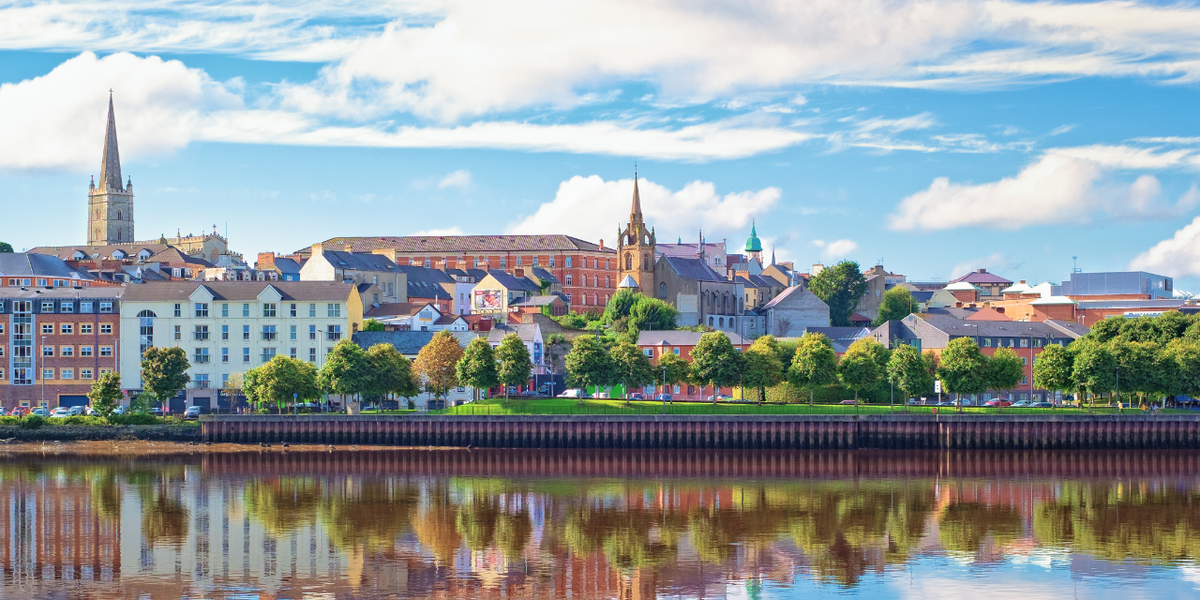
Ireland has quietly become one of the most talked-about destinations among Kerala students exploring a master's abroad — and once you look past the usual UK-vs-Canada comparison, it's easy to see why. An English-speaking EU country, home to the European headquarters of nearly every major global tech and pharma company, with one of the most generous post-study stay-back options in Europe. If you're considering a master's in Ireland as an international student, here's what you actually need to know before you apply.
Why Ireland Is Gaining Ground with Kerala Students
Ireland offers something genuinely rare: EU-standard education and an EU address, without needing to learn a new language, since English is the primary language of instruction and daily life. It's also become known as Europe's "Silicon Valley" — nine of the world's top ten tech companies base their European operations there, alongside a strong presence in pharmaceuticals, finance, and life sciences. For Kerala students eyeing careers in tech, data, finance, or biotech, that concentration of employers in one small country is a genuine draw, not just marketing language.
Ireland's universities are also well represented in global rankings, and because the country is small, students often get more direct access to faculty, industry placements, and career services than they might at a larger, more anonymous university elsewhere.
Popular Master's Courses Among Indian Students
Data analytics, computer science, business analytics, finance, pharmaceutical sciences, and biotechnology are among the most sought-after master's programmes for Indian students in Ireland — largely because they map directly onto the country's strongest job sectors. Public health and nursing-related master's programmes are also gaining interest from Kerala students, given the state's strong healthcare education background. As with any destination, the smarter approach is choosing a course based on your career goal and the local job market for that specific field, rather than picking a subject purely because it's popular.
Top Universities to Consider
Trinity College Dublin, University College Dublin, University College Cork, NUI Galway, and Dublin City University are among the most recognised names for postgraduate study, each with particular strengths — UCD and Trinity are strong across business, tech, and life sciences; DCU has strong industry links in tech and business; while Cork and Galway offer excellent programmes at a somewhat lower cost of living than Dublin. As with the UK and New Zealand, the "best" university is the one that fits your specific course and budget — not necessarily the most famous name.
Cost of Studying in Ireland
Tuition fees for master's programmes in Ireland vary widely by university and subject, with STEM and business programmes generally costing more than humanities or social science courses — it's worth checking current fees directly with each university rather than relying on averages. Living costs are notably higher in Dublin than in cities like Cork, Galway, or Limerick, so choosing a university outside the capital can meaningfully reduce your overall budget without compromising on course quality. As always, it helps to plan a full-course budget covering tuition, accommodation, insurance, and living costs upfront, rather than comparing tuition fees in isolation.
Student Visa Requirements for Indian Students
Indian students need a long-stay (Type D) Study Visa to pursue a master's in Ireland, issued through the Irish Naturalisation and Immigration Service (INIS). To qualify, you'll need an offer from a programme listed on the Interim List of Eligible Programmes (ILEP), proof of sufficient funds to cover tuition and living costs, valid health insurance, and evidence of genuine intent to study. Most master's applicants will also need an English proficiency score (commonly IELTS), even if their undergraduate degree was taught in English, depending on the university's specific requirements.
The Real Draw: Ireland's Stay-Back Visa
This is arguably Ireland's single biggest advantage over many competing destinations right now. Under the Third Level Graduate Programme — commonly known as Stamp 1G — master's and PhD graduates (NFQ Level 9 and above) can remain in Ireland for up to 24 months after graduation to search for work, without needing a job offer in hand first. This is granted as an initial 12-month period followed by a further 12-month renewal, and during this time graduates can work full-time in any sector while they search for or begin graduate-level employment.
Once a Stamp 1G holder secures a graduate-level role, they can typically move onto a Critical Skills Employment Permit or General Employment Permit, which puts them on a path toward longer-term residency after several years of continuous employment. For Kerala students weighing the return on investment of an international master's, a clearly defined two-year stay-back window — with no job offer required upfront — is a genuinely strong proposition compared to some other popular destinations.
Working While You Study
International students in Ireland on a valid student visa can generally work up to 20 hours per week during term time and full-time during scheduled college holidays, which helps offset living costs while studying — a practical consideration many Kerala families factor into their overall budgeting.
Life in Ireland as an Indian Student
Ireland has a growing Indian student and professional community, particularly in Dublin, Cork, and Galway, with active Indian associations, grocery stores, and cultural events making it easier to settle in. Ireland is also consistently ranked among the friendliest and safest countries for international residents, which tends to reassure parents who are sending a child abroad for the first time.
Is Ireland the Right Fit for You?
Ireland tends to suit students targeting careers in tech, finance, pharma, or life sciences who want strong post-study work rights without needing to learn a new language, and who are comfortable with a smaller country and a more compact university system than, say, the UK or Canada. It may be less suited to students seeking an extremely wide range of course specialisations only available at large multi-campus systems elsewhere — in which case it's worth comparing directly against other destinations before deciding.
How Cliftons Study Abroad Can Help
Deciding between Ireland, the UK, Canada, and other destinations comes down to your specific course, budget, and career plan — and the details (like stay-back rules and course-specific job markets) matter more than general reputation. At Cliftons Study Abroad in Kochi, we help students across Kerala compare these options honestly, shortlist the right Irish universities and programmes, and manage the visa and application process end to end.
Considering a masters in Ireland? [Book a free consultation with Cliftons Study Abroad today.]